Call Us Today!
(718) 347-6262


Advances in dental materials and techniques have made replacing missing teeth more effective and natural-looking than ever. While dental implants and traditional bridgework provide fixed options for many patients, removable dentures remain a versatile and reliable way to restore a complete, functional smile for people of all ages.
At the office of David M. Goldberg, DDS, we design dentures using high-quality materials and careful craftsmanship to achieve a comfortable fit and an appearance that harmonizes with your facial features. Our approach emphasizes function, esthetics, and long-term oral health so patients can speak, eat, and smile with confidence.
Every patient’s needs are different, and our team takes time to evaluate your oral health, goals, and daily habits before recommending a denture solution. Whether you need a partial to preserve remaining teeth or a full set to replace all the teeth in an arch, our aim is to deliver results that feel natural and work well for your lifestyle.
Losing one or more teeth changes how your mouth works. Beyond the obvious gap in your smile, missing teeth can alter the mechanics of chewing and change the balance of pressure across your bite. Over time those changes can cause remaining teeth to shift, creating new problems and making future restorative work more complex.
Bone and soft tissues in the jaw depend on stimulation from natural tooth roots to maintain their shape. When a tooth is lost and not replaced, the bone may gradually remodel and shrink. This process can change facial contours and contribute to a sunken or aged appearance if multiple teeth are absent.
There are social and practical consequences as well. Difficulty chewing can limit food choices and affect nutrition, while changes in speech or self-consciousness about missing teeth can reduce quality of life. Replacing lost teeth restores oral function and helps preserve the health and alignment of the remaining dentition.
A denture is a removable prosthesis made of artificial teeth set into a supportive base that rests on the gums. Contemporary denture teeth are crafted to look natural in color and shape, and bases are contoured to follow gum anatomy for improved comfort and retention. The goal is to mimic the function of natural teeth while supporting facial structure.
Because dentures are removable, they make daily hygiene straightforward: the prosthesis can be cleaned outside the mouth, and the gums and any remaining natural teeth can be cared for more thoroughly. That removability also makes adjustments and relines simpler when changes in the tissues occur.
Not all dentures are the same. Designs vary to match each patient’s anatomy and needs — from lightweight partials that preserve healthy teeth to full dentures that recreate an entire arch. The choice depends on the number of missing teeth, the condition of the remaining teeth and tissues, and the patient’s expectations for function and esthetics.
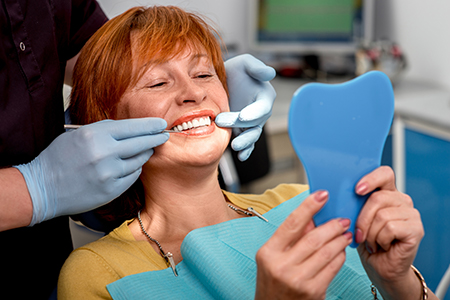
Choosing between a partial and a full denture comes down to how many natural teeth remain and their stability. Partial dentures fill gaps while helping to prevent adjacent teeth from drifting; full (complete) dentures restore an entire arch when most or all teeth are missing.
Full dentures are tailored to the contours of the palate and jaw and can be made as conventional appliances after healing from extractions, or as immediate dentures placed the same day teeth are removed. Immediate options let patients avoid a period without teeth, though they may need adjustments as tissues heal.
Partial dentures typically use clasps, precision attachments, or a supportive framework to secure the prosthesis to the remaining teeth. Advances in materials have expanded options: modern partials can be crafted from flexible resins, cast metal frameworks, or hybrid materials to balance comfort, strength, and appearance.
A conventional complete denture is made after extractions and tissue healing are complete, which allows the lab to capture the final tissue contours for a precise fit. For patients who prefer not to be without teeth while healing, an immediate denture can be placed at the time of extraction and later adjusted or replaced to match the healed tissues.
Immediate Denture
An immediate denture provides continuity of appearance and function immediately following extractions. Because the jaw and gums change shape during healing, these prostheses commonly require relining or replacement once healing stabilizes.
Overdenture
An overdenture fits over remaining natural tooth roots or specially placed abutments. Retaining roots or using attachments can preserve bone and improve stability while still offering the benefits of a removable appliance.
Implant-Supported Dentures
Implant-supported dentures attach to strategically placed dental implants for increased retention and chewing efficiency. These hybrid solutions combine the removability of a denture with the security of implant anchorage.
When solid natural teeth remain, a removable partial denture can restore missing teeth while stabilizing the occlusion (bite). Proper design preserves tooth structure, distributes chewing forces, and protects the health of adjacent teeth.
Contemporary partials are customized for fit and function. The choice of materials and attachment methods takes into account comfort, longevity, and how the appliance will blend with your existing smile. Our team carefully evaluates each case to recommend the best prosthesis for your oral condition and daily needs.
Regardless of the type selected, a well-made denture aims to restore chewing ability, improve speech clarity, and support a natural facial appearance so you can enjoy everyday activities without hesitation.
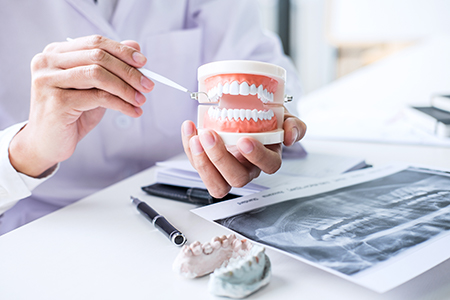
Successful denture care begins with a thorough diagnostic process. We review your medical and dental history, examine soft tissues and remaining teeth, and use diagnostic imaging when needed to understand bone structure and identify any issues that might affect fit and comfort.
When necessary, extractions or pre-prosthetic procedures are planned to create an optimal foundation for a denture. In some cases, combining denture therapy with implant placement provides enhanced retention and preserves bone. The treatment plan always balances short- and long-term goals for oral health and function.
The fabrication sequence typically includes impressions, bite records, try-ins, and final processing. Each step is an opportunity to refine how the denture fits, how it looks, and how it functions. We welcome patient input during try-ins so the final smile reflects personal preferences and clinical requirements.
Our team coordinates each phase of care with attention to comfort and communication, so patients understand what to expect at every appointment and leave with a prosthesis that meets both practical needs and esthetic goals.

Adapting to a new denture takes time. Initial adjustments are common as the mouth learns to accommodate the appliance — speaking and chewing may feel different for a few days to a few weeks. Regular follow-up visits allow us to fine-tune the fit, relieve sore spots, and improve comfort.
Good daily care preserves the appearance and function of a denture. Rinse and brush the prosthesis after meals, use a denture brush or soft brush to remove deposits, and soak the appliance overnight in water or a recommended cleanser. At the same time, care for any remaining teeth and gently clean the gums and tongue to support oral health.
Over time, natural bone and gum contours can change, which may affect how a denture fits. Relining or rebasing a denture restores close contact with the tissues, while periodic evaluations let us monitor oral health and recommend any necessary improvements or upgrades to the prosthesis.
For some patients, adhesives or implant attachments provide extra stability. We discuss the full range of retention options and select the solution that best matches your anatomy and lifestyle, always aiming for a secure fit that enhances confidence and function.
At the office of David M. Goldberg, DDS, we are committed to helping patients regain comfortable function and a natural-looking smile. If you have questions about dentures or would like to learn which solution may be right for you, please contact our office for more information.
Dentures are removable prostheses that replace missing teeth and support facial tissues. The two primary categories are partial dentures, which fill gaps when some natural teeth remain, and complete dentures, which replace all teeth in an arch. Each category includes variations tailored to fit the patient’s anatomy and functional needs.
Immediate dentures are made to be placed at the time of extraction to avoid a period without teeth, although they typically require follow-up adjustments. Overdentures fit over retained tooth roots or attachments to help preserve bone and improve stability. Implant-supported dentures connect to dental implants for increased retention and chewing efficiency while still offering the benefits of a removable appliance when appropriate.
Determining the best solution begins with a comprehensive dental evaluation that reviews your medical history, the condition of remaining teeth, gum health, and the amount of jawbone present. Diagnostic imaging and clinical measurements help your dentist understand whether implant placement is feasible and whether an overdenture or implant-supported prosthesis would add meaningful stability. Patient goals for function, appearance, and daily habits also factor into the recommendation.
For patients with adequate bone and overall health, implant-supported options can offer superior retention and preserve bone over time. When implant therapy is not suitable, well-designed conventional or overdenture solutions can restore function and esthetics effectively. Your dental team will explain the advantages and limitations of each approach so you can make an informed choice.
The denture process typically begins with a diagnostic appointment that includes oral examination, impressions, and bite records to capture jaw relationships. Laboratory steps commonly include wax try-ins so you can evaluate tooth position and appearance before final processing, and the dentist refines fit and esthetics at each stage. If extractions or pre-prosthetic procedures are required, those steps are planned to optimize the foundation for the denture.
For immediate dentures, the prosthesis is placed at the time of extraction and then adjusted as tissues heal, while conventional dentures are fabricated after healing to capture stable tissue contours. Follow-up visits are an important part of the process to relieve sore spots, refine occlusion, and ensure comfortable function. Communication between the patient, dentist, and dental laboratory helps achieve predictable, long-lasting results.
Daily denture care begins with gentle cleaning after meals to remove food particles and plaque; use a soft denture brush or a soft toothbrush and a cleanser recommended by your dentist. Rinse the prosthesis thoroughly and soak it overnight in water or a denture-specific solution to keep it hydrated and clean. Avoid abrasive household cleaners, whitening toothpastes, and hot water that can damage denture materials.
At the same time, maintain oral hygiene for any remaining natural teeth, and gently clean the gums, tongue, and palate to support tissue health. Bring your denture to dental visits so the dentist can inspect it for wear and verify tissue health beneath the appliance. Proper daily care and routine professional checks prolong the life of the prosthesis and help prevent irritation or infection.
An adaptation period is normal after receiving new dentures; speech and chewing mechanics change as your mouth learns to accommodate the prosthesis. Initial soreness, increased salivation, and small shifts in fit are common during the first days to weeks and usually improve with gradual use and follow-up adjustments. Practicing speaking slowly and starting with a soft diet can help you regain confidence while your muscles adapt.
Regular follow-up appointments allow the dentist to relieve sore spots, refine the bite, and make any necessary relines so the denture fits comfortably. If discomfort persists or if chewing or speech does not improve, further evaluation can identify adjustments or alternative retention options. Patience and communication with your dental team are key to a successful transition.
Overdentures are designed to fit over retained tooth roots or specially placed abutments, which can help preserve underlying bone and provide added stability compared with a conventional denture. Implant-supported dentures attach to dental implants placed in the jaw, delivering enhanced retention and improved chewing efficiency that often approach the function of natural teeth. Conventional dentures rely solely on tissue support and suction for retention and may be more susceptible to movement during function.
The choice among these options depends on oral anatomy, bone quantity, and the patient’s goals for stability and maintenance. Implant-based options typically require surgical planning and a healing period, while overdentures and conventional dentures may be completed with fewer surgical procedures. Your dentist will review the expected benefits and care requirements for each approach to match the treatment to your needs.
Partial dentures are engineered to restore missing teeth while minimizing stress on remaining natural teeth by distributing chewing forces across a supportive framework and soft tissues. Clasps, precision attachments, or cast frameworks are selected to provide secure retention while preserving the health and position of adjacent teeth. Proper occlusal design and fit help prevent unwanted tooth movement and maintain stable bite relationships.
Material choices and attachment methods are chosen based on the condition of the remaining teeth and the patient’s functional needs, balancing comfort and durability. Regular dental examinations ensure that the partial continues to fit properly and that the natural teeth and supporting tissues remain healthy. Timely maintenance preserves both the denture and the remaining dentition over the long term.
Changes in the jawbone and soft tissues over time can alter how a denture fits; relining restores close contact between the denture base and the tissues to improve stability and comfort. Rebasing replaces the denture base material while retaining the original teeth arrangement for a more substantial restoration of fit when the base has deteriorated. Replacement is appropriate when the prosthesis is extensively worn, the teeth are compromised, or the design no longer meets functional or esthetic needs.
Signs that a denture needs attention include persistent sore spots, difficulty chewing, changes in speech, or visible wear of the denture teeth. Routine dental visits allow your dentist to monitor fit and function and recommend timely relines, rebasing, or replacement to prevent complications. Addressing fit issues promptly helps maintain oral health and patient comfort.
Well-fitting dentures can significantly restore chewing ability and improve speech clarity by reestablishing tooth position, vertical dimension, and proper contact between upper and lower teeth. Accurate tooth arrangement and occlusal balance are essential components in enabling efficient chewing and reducing strain on the jaws. For many patients, denture therapy broadens dietary choices and supports better nutrition when compared with leaving multiple teeth unreplaced.
Speech often improves as patients adapt to the new prosthesis, though some sounds may require practice to articulate naturally at first. Adjustments to tooth position, flange contours, or occlusion can be made when persistent speech or chewing issues occur. In selected cases, implant-supported solutions further enhance stability and functional performance for speech and mastication.
At the office of David M. Goldberg, DDS we begin denture care with a thorough diagnostic evaluation that includes oral health assessment, impressions, bite records, and, when needed, imaging to understand bone and tissue anatomy. The team collaborates closely with dental laboratory technicians during try-ins and fabrication to refine tooth selection, shade, and position so the final prosthesis complements facial features and meets functional goals. Patient input during try-ins is encouraged so esthetic preferences and practical needs are addressed before final processing.
Follow-up care is an integral part of our approach and includes adjustments, relines, and routine examinations to maintain fit and oral health over time. When appropriate, we discuss overdenture or implant-supported options to enhance retention and preserve bone, and we explain maintenance requirements for each solution. This methodical process helps deliver dentures that are comfortable, durable, and harmonized with the patient’s smile.