Call Us Today!
(718) 347-6262


Losing one or more teeth affects more than appearance — it changes how you chew, speak, and even how your jaw ages over time. Modern dental implants restore a missing tooth’s form and function by replacing the root as well as the visible crown, which makes chewing more efficient and preserves the structure of the jaw. For many people, implants are the most predictable long-term option for rebuilding a confident, natural-feeling smile.
Implant treatment brings together clinical planning, precise surgery, and high-quality prosthetic design. That combination allows patients to regain everyday abilities like biting into an apple or speaking without worry. Implants are designed to integrate with your bone, creating a stable foundation for crowns, bridges, or full-arch restorations that look and perform like natural teeth.
When you’re exploring tooth replacement options, it helps to have clear explanations and a plan that fits your goals. Our approach emphasizes careful evaluation and step-by-step treatment so patients understand what to expect at every stage. That clarity helps reduce anxiety and leads to more predictable results.
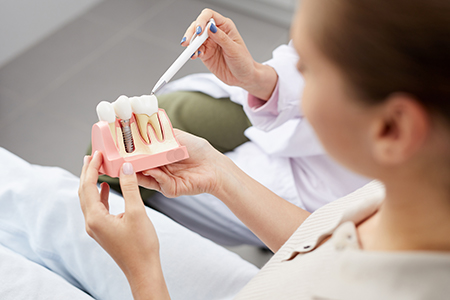
Dental implants are small, biocompatible posts that are surgically positioned in the jawbone to replace missing tooth roots. Once an implant becomes firmly integrated with bone, it serves as an anchor for a custom crown, bridge, or denture. Because the implant transmits normal chewing forces into the bone, it helps maintain jaw density and facial contours that would otherwise diminish over time.
Unlike removable options, an implant-supported restoration is fixed in place or snaps securely into position, allowing for reliable chewing and clear speech. Materials and designs used today prioritize longevity and a close match to natural tooth color, shape, and texture.
In practice, implant dentistry combines surgical skill with precision prosthetics. Clinicians use digital imaging and careful measurements to choose optimal implant size and position so the final restoration aligns comfortably with neighboring teeth and the overall bite.
Beyond cosmetic improvement, implants address real functional concerns. Because they integrate with bone, implants stabilize the mouth and reduce the risk of shifting teeth. For patients who previously struggled with removable dentures, implants eliminate many of the common inconveniences — slipping, clicking, and dietary limits — so you can enjoy a wider variety of foods with confidence.
Implants also support long-term oral health. By preserving bone volume and avoiding alteration of healthy neighboring teeth, implant solutions help maintain the integrity of the surrounding dental structures. When planned and cared for properly, implants can provide many years of reliable service.
Finally, implants are highly customizable. Whether you need a single tooth replaced or a full-arch reconstruction, clinicians can design a solution that balances function, comfort, and aesthetics so the result suits your smile goals and lifestyle.
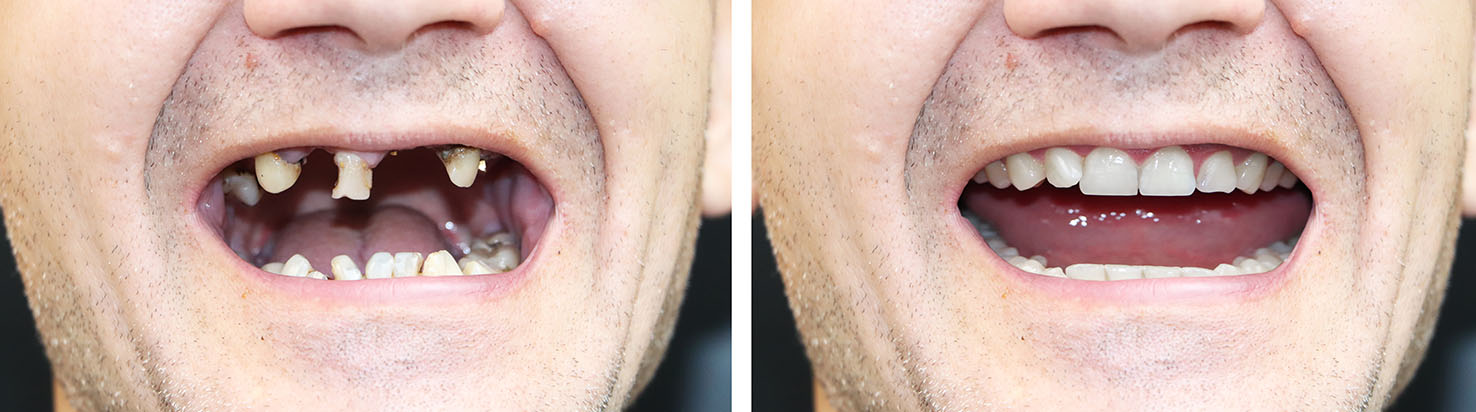
Implant dentistry is not one-size-fits-all. The ideal approach depends on how many teeth are missing, the condition of the jawbone, and your personal priorities for comfort and appearance. Treatment plans are tailored so each patient receives the appropriate number and type of implants to support the desired final restoration.
For single missing teeth, a single implant restored with a custom crown is often the preferred option because it replaces a tooth without affecting adjacent natural teeth. For multiple missing teeth, implants can support bridges that restore several teeth in a row while preserving surrounding structures.
For patients missing most or all teeth, implant-supported full-arch restorations offer a fixed or removable option that dramatically improves stability and function compared with traditional dentures. Strategic implant placement allows clinicians to support many replacement teeth with just a few implants, streamlining the surgical and restorative process.
A single implant and crown restore an individual gap without altering neighboring teeth. This approach provides a natural look and full chewing ability while protecting adjacent dental tissue.
When two or more teeth are missing in a row, implants can support a bridge that spans the space. Implant-supported bridges avoid the need to file or crown healthy teeth and help keep the underlying bone healthy by transmitting normal chewing forces.
For extensive tooth loss, a full-arch prosthesis anchored by multiple implants rebuilds a complete set of teeth. These solutions can be designed as a fixed arch or as an implant-retained denture, depending on patient preference and clinical findings.
When a removable denture is preferred, attaching it to a small number of implants significantly increases stability and comfort. This hybrid option combines the convenience of a denture with the retention benefits of implants.
Successful implant treatment begins with a thorough evaluation. Digital imaging, a review of medical and dental history, and a clinical exam help determine bone health, gum condition, and the best placement strategy. This planning phase ensures implants are positioned for optimal long-term support and appearance.
Implant placement is typically performed as an outpatient procedure. The level of invasiveness depends on the number of implants and whether additional steps—such as bone grafting or tooth extraction—are needed first. Many patients experience only mild to moderate discomfort after surgery, and clinicians provide clear post-op guidance to support recovery.
After placement, implants require time to integrate with the jawbone. During that period, temporary restorations may be used so you can eat and speak comfortably while the site heals. Once integration is complete, the final prosthetic teeth are crafted and delivered to achieve the intended form and function.
A strong, healthy bone foundation is essential for predictable implant success. When bone has receded due to tooth loss or periodontal disease, a bone graft can rebuild the necessary volume and shape. Grafting procedures vary in complexity, from minor ridge augmentation to more involved block grafting, and are planned to match each patient’s anatomical needs.
With appropriate grafting and healing, many patients who initially lack sufficient bone become excellent candidates for implant treatment. The goal is always a stable, long-lasting result that supports both function and aesthetics.
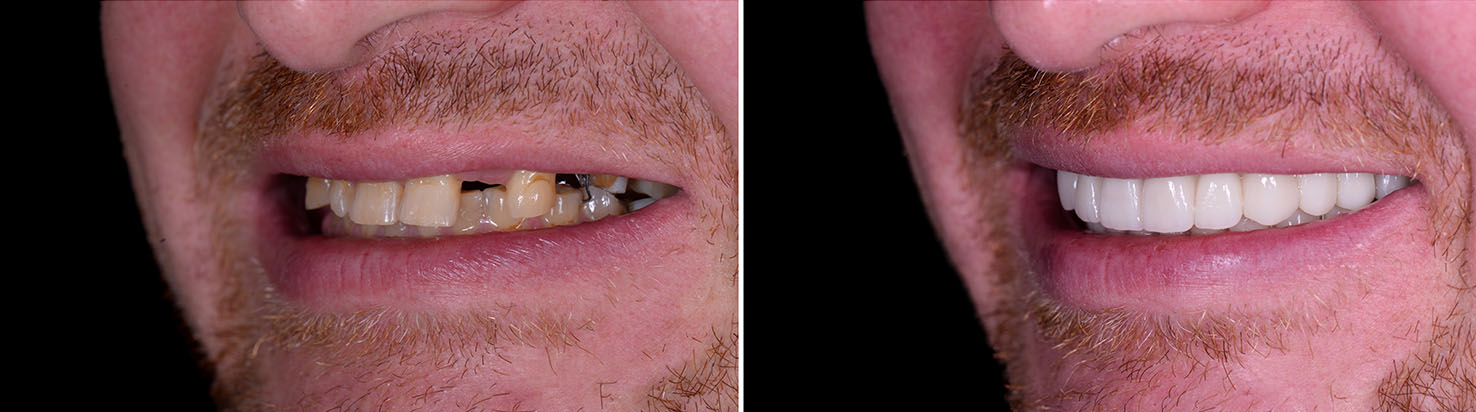
Determining candidacy for implants takes into account overall health, oral hygiene, and practical goals. Most adults in good general health who maintain reasonable periodontal health are potential candidates. Clinicians will review any medical conditions or medications that could affect healing and work with you to create a safe, effective plan.
When an implant treatment plan is agreed upon, the process emphasizes clear communication: expected timelines, procedural steps, and home care responsibilities are covered so you can participate actively in your outcome. Good oral hygiene and routine dental visits are essential to protect both the implant hardware and the surrounding gum tissue over the long term.
Ongoing maintenance typically includes regular professional cleanings and at-home brushing and flossing. With attentive care, implants can remain a dependable part of your oral health strategy for many years.
At the office of David M. Goldberg, DDS, we aim to deliver implant care that balances surgical precision with prosthetic excellence. If you’re considering implants and want an informative, down-to-earth conversation about what modern implant dentistry can do for your smile, please contact us for more information.
Dental implants are small, biocompatible posts placed in the jaw to replace missing tooth roots and support artificial teeth. Through a process called osseointegration, the implant bonds with the surrounding bone to create a stable foundation for a crown, bridge, or denture. This root-level replacement restores chewing function and helps maintain jawbone structure that otherwise diminishes after tooth loss.
Implant restorations are designed to match the color, shape, and function of natural teeth so they feel familiar in everyday use. Because the implant transmits normal chewing forces into the bone, it helps preserve facial contours and prevents neighboring teeth from shifting. The surgical and prosthetic steps are coordinated so the final restoration aligns with the bite and adjacent teeth for long-term comfort and performance.
Most adults in good general health who maintain reasonable gum hygiene are potential candidates for dental implants. Clinicians evaluate medical history, periodontal health, and bone volume to determine whether implants are appropriate or whether preparatory treatments such as gum therapy or bone grafting are needed. Certain medical conditions and medications may affect healing, so a complete review of health factors is part of candidacy assessment.
Smoking and uncontrolled periodontal disease can reduce implant success, so addressing those issues improves outcomes and extends longevity. When bone volume is insufficient, grafting techniques can rebuild the foundation to support implants in many cases. A personalized consultation clarifies candidacy and outlines any steps required to become an implant candidate.
Treatment begins with a comprehensive evaluation that includes digital imaging, a review of medical and dental history, and a clinical exam to plan implant size and position. The surgical placement is usually an outpatient procedure performed under local anesthesia, and any necessary preparatory work such as extractions or bone grafting is scheduled in a staged approach. After placement, implants require a healing period for osseointegration before the final prosthetic teeth are delivered.
During healing, temporary restorations can maintain appearance and basic function while the implant integrates with bone. Follow-up visits monitor healing and guide the transition to the final crown, bridge, or full-arch prosthesis once stability is confirmed. At the office of David M. Goldberg, DDS, we explain each stage and provide a clear timeline so patients know what to expect from evaluation through restoration.
Dental implants replace the root as well as the visible tooth, which preserves bone and avoids altering adjacent healthy teeth. Traditional bridges rely on neighboring teeth for support and may require reshaping those teeth, while removable dentures rest on the gums and can allow bone loss over time. Implant-supported solutions provide greater stability, improved chewing efficiency, and a closer approximation to natural tooth function.
The choice between implants, bridges, and dentures depends on how many teeth are missing, the condition of surrounding tissues, and patient goals for comfort and aesthetics. Implants often offer a longer-term solution and reduce the need to modify neighboring teeth, but bridges and dentures remain appropriate options in specific clinical situations. A thorough clinical assessment identifies the restoration that best balances function, preservation of oral structures, and patient preferences.
Bone quality and quantity are critical to predictable implant integration because the implant relies on solid bone contact for long-term stability. When bone has resorbed after tooth loss or because of periodontal disease, grafting procedures can rebuild the necessary volume and provide a suitable foundation for implants. The type and extent of bone grafting vary by case, ranging from simple ridge augmentation to more involved techniques.
Digital imaging helps clinicians evaluate bone anatomy precisely and plan implant placement to maximize support and aesthetics. Adequate bone also contributes to favorable emergence profiles for crowns and reduces the risk of mechanical complications. Ongoing monitoring ensures that bone and soft tissues remain healthy around the implant throughout its lifetime.
Immediate post-operative recovery typically involves a few days of mild to moderate swelling and discomfort that can be managed with prescribed or over-the-counter medications and cold packs. Soft foods and careful oral hygiene are recommended in the first week while the surgical site begins to heal, and clinicians provide specific instructions for care and activity. Most patients return to normal day-to-day activities within a few days, depending on the extent of the surgery.
Full integration of the implant with the jawbone usually takes several weeks to a few months, during which time follow-up visits monitor healing and stability. Temporary restorations may be used to maintain appearance and basic function during this phase. Once integration is confirmed, the final prosthetic restoration is placed and follow-up care focuses on maintaining oral health and implant longevity.
Implants can support a wide range of restorations, from single crowns to multi-tooth implant-supported bridges and full-arch rehabilitations. Single-tooth implants replace individual gaps with a crown, while implant bridges can span several missing teeth without altering adjacent natural teeth. For patients with extensive tooth loss, full-arch solutions anchored by multiple implants restore a complete dental arch with either fixed or implant-retained removable prostheses.
Restorations are custom-designed to match tooth color, shape, and function, and modern materials provide durable, aesthetic results. The choice of restoration depends on the number of missing teeth, bone availability, and patient goals for permanence and maintenance. Careful planning ensures the selected restoration balances comfort, function, and appearance for each patient.
Daily oral hygiene is essential for implant health and includes regular brushing, interdental cleaning with floss or interdental brushes, and rinsing as recommended by your clinician. Maintaining good plaque control around implant restorations prevents inflammation of the surrounding soft tissues and reduces the risk of peri-implant complications. Patients should adopt a consistent home-care routine and avoid habits that stress the restorations, such as chewing on hard objects.
Professional maintenance visits are important to monitor tissue health, check restoration fit, and perform specialized cleaning when needed. Periodic radiographs and clinical assessments help detect early changes so they can be managed promptly. With attentive home care and regular professional follow-up, implants can remain a reliable part of your oral health strategy for many years.
Yes, contemporary implant care commonly employs advanced imaging such as cone beam computed tomography (CBCT) and digital impressions to evaluate anatomy and plan placement precisely. These tools allow clinicians to measure bone dimensions, visualize critical structures, and design implant positions that optimize support and aesthetics. Digital planning can be used to create surgical guides that translate the virtual plan into accurate intraoral placement during surgery.
Guided techniques and digital workflows improve predictability, reduce intraoperative guesswork, and often streamline restorative steps. The combination of imaging, guided placement, and digital prosthetic design helps produce restorations that fit more accurately and function more reliably. Patients benefit from a coordinated surgical and prosthetic approach that prioritizes safety and long-term outcomes.
Treatment is individualized by assessing each patient’s oral health, facial anatomy, lifestyle, and aesthetic goals to create a restorative plan that meets both functional and cosmetic objectives. The clinical team collaborates on treatment sequencing, whether that includes preparatory periodontal care, bone grafting, or coordination with specialists when complex reconstruction is needed. Clear communication about expected timelines, home-care responsibilities, and follow-up fosters informed decision-making.
Personalized care also extends to prosthetic design, where tooth shape, shade, and occlusion are customized to blend naturally with existing teeth and facial features. The practice emphasizes precision in both surgical placement and prosthetic fabrication to achieve comfortable function and a pleasing appearance. Patients in Bellerose and the surrounding communities can expect a thoughtful, step-by-step approach focused on long-term oral health and reliable implant performance.